Max comment length: 0/4096

Show Emotes mikuwelcome mikuhappy rinthumbs rinheart lenno lensorry lenthumbs lenshock lukaclap lukasparkle kaitocheer kaitolick meikolol meikojoy meikoangry lukaspin yukarietto
File / Embed / Poll / Tegaki
Drag files here to upload or
click here to select them, or paste an image

Verified — you can post.

Name the character shown in the picture.

Loading image…

(for deletion)
  • Please read the Rules and FAQ before posting.
  • Supported file types are: GIF, JPG, OGG, MP3, MP4, PNG, SWF, WEBM, WEBP.
  • Supported embeds are: YouTube, Nicovideo, Twitter/X, Bluesky, BiliBili, Vocaroo.
  • Maximum file size allowed is 20MB.
  • Images greater than 250x250 pixels will be thumbnailed.

We're aware about all the current bugs. If you find more please post about it on the /meta/ thread.
Expect them to be fixed within the coming days.


[Gallery] [Return] [Catalog] [Bottom]
ClipboardI….png - 1038.41 KB (675x1200) Download SauceNAO IQDB Yandex
Only Mikudayos can post in this thread
>>
CfMvXEiWEA….jpg - 94.28 KB (720x960) Download SauceNAO IQDB Yandex
oh rly?
>>
ClipboardI….png - 582.64 KB (1200x630) Download SauceNAO IQDB Yandex
>>17663
Yeah rly
>>
1917234650….jpg - 178.39 KB (1024x768) Download SauceNAO IQDB Yandex
Don't you know, OP
We Mikudayos run this site
>>
ClipboardI….png - 128.60 KB (512x512) Download SauceNAO IQDB Yandex
>>
I'm glad to be a Mikudayo with the privilege of posting on this VERY IMPORTANT THREAD
>>
mikudayo-v….gif - 362.51 KB (220x220) Download SauceNAO IQDB Yandex
Mikudayo-
>>
ClipboardI….png - 292.13 KB (360x560) Download SauceNAO IQDB Yandex
I'm hungry
>>
Good Luck,….png - 301.44 KB (960x720) Download SauceNAO IQDB Yandex
would
>>
>>17793
You're a dayo yourself you know
>>
icon-mikua….jpg - 89.01 KB (600x600) Download SauceNAO IQDB Yandex
>>17966
IM SEXY AND I KNOW IT
>>
You're Mikudayo, he's Mikudayo, she's Mikudayo, i'm Mikudayo, we are Mikudayo
>>
Mikudayo
>>
mikudayo-i….png - 264.00 KB (447x558) Download SauceNAO IQDB Yandex
boo
>>
Ecwo6TaX0A….jpg - 46.87 KB (707x530) Download SauceNAO IQDB Yandex
Just met the dude from that John Wick film
>>
>>21763
I used to think this photo was real
>>
saki-fujit….mp4 - 568.10 KB (720x720) Download SauceNAO IQDB Yandex
>>
>>24702
I can't make out whatever she's saying
>>
>>24703
おいミクダヨー、おいミクダヨー。
Oi mikudayō, oi mikudayō.
I think. But it sounds more like "mikuNdayo" to me, so I don't know.
>>
>>24705
Sounds more like Mikandayo
>>
>>24705
That's not Mikudayo it's Mirai Miku so she's probably saying something else
>>
>>24706
Now I'm hearing it as "hekandayo".
>>24710
Oh you're right, she would be saying the word dayo, not the name Mikudayo.
おいミクだよ、 おいミクだよ。
Oi Miku dayo, oi Miku dayo.
Hey, I'm Miku! Hey, I'm Miku!
>>
>>24702
Lukadayo
>>
>>24712
https://youtube.com/watch?v=NIQ2pLEkqHU [Embed]

I found more footage. Here's my latest guess:
>おい予感だよ、 おい予感だよ。
>Oi yokan dayo, oi yokan dayo.
>Hey, I've got a hunch! Hey, I've got a hunch!
I think she is referring to an upcoming event, like she has a feeling that something exciting is about to happen.
>>
Why so much guessing... 時間だよ is the only things that makes sense.
>>
>>24754
Yeah, sounds about right.
おい~ 時間だよ~

Everyone knows that /leek/ can't Japanese.
>>
>>24758
>Everyone knows that /leek/ can't Japanese.
I try, anon, I try
>>
ClipboardI….png - 618.79 KB (680x960) Download SauceNAO IQDB Yandex
>>
20260529_0….jpg - 320.51 KB (1536x2048) Download SauceNAO IQDB Yandex
Dayo
>>
>>24760
I believe in u
>>
>>24719
I wonder if it's also a pun on "Mikudayo"
>>
>>27344
Probably. She is doing the Miku voice there. But that's not Mikudayo she's holding, it's Mirai Miku.
>>
lvFMKjF.gif - 444.69 KB (420x315) Download SauceNAO IQDB Yandex
>>27344
>>27345
I still hear it as "yikandayo", but Japanese does not have a "yi" hiragana, only "ya"/「や」, "yu"/「ゆ」, and "yo"/「よ」. "ji"/「じ」 sounds closer to what she's saying than "yo"/「よ」, so that gives us "oi jikan dayo"/「おい・じかん・だよ」 or 「おい時間だよ」 with kanji. Literally: "Hey! It's time, isn't it?" I don't know if that grammatically makes sense, but the YouTube transcript says 「時間」 so I'm pretty sure that I was wrong, and >>24754 is correct.
"dayo"/「だよ」 is a contraction of "dayone"/「だよね」. "Mikudayō"/「ミクダヨー」 is a pun that sounds like "Miku dayo"/「ミクだよ」, meaning something like: "It's Miku, isn't it?".
I didn't know any Japanese, so I couldn't understand what she was saying, but I did recognize "dayo", saw her holding the Miku figurine, and assumed that's what she was talking about. But in hindsight, I don't think she's referring to the Project Mirai figure; I think she's just using it like a puppet while imitating Miku's voice, so that 'Hatsune Miku' is announcing the start of the event.
>>
Hatsune Mi….jpg - 60.83 KB (528x704) Download SauceNAO IQDB Yandex
>>27357
Anyway here's some tangentially related trivia:
"Hatsune Miku"/「初音ミク」 means "the first sound of the future". "Hatsune"/「初音」 is written in kanji, with the readings for "hatsu"/「はつ」/「初」 (the first of) and "ne"/「ね」/「音」 (sound), but "Miku"/「ミク」 is written in katakana, and I'm not entirely sure why. The kanji reading for 「未来」 that means "future" is "mirai"/「みらい」, which can be used as a name, but 「未来」 can also be read as "miku"/「みく」, which can also be used as a name, while still meaning "future", but for some reason is phonetically transcribed in katakana as 「ミク」. My guess is that this is to avoid ambiguity and/or a stylistic choice.
Also the title for "Hatsune Miku and Future Stars: Project Mirai" is written mostly in English, for a Japanese audience, with a phonetic transcription in katakana only for "Project Mirai" 「プロジェクト ミライ」/"purojekuto mirai", even though "mirai"/「みらい」/「未来」 is a Japanese word that, like I said, means "future", so if translated literally, you get: "The First Sound of the Future and Future Stars: Project Future".
>>
>>27357
Quick correction:
>"dayo"/「だよ」 is a contraction of "dayone"/「だよね」.
This is wrong. I was having a hard time finding "dayo" in the dictionary and I got confused. Read this if you want to know what "dayo" means:
https://www.alexrockinjapanese.com/meaning-of-dayo-in-japanese-and-english-how-to-use/
The translations are wrong too:
>"Hey! It's time, isn't it?"
Should be "Hey! It's time!" and
>"It's Miku, isn't it?".
Should be "It's Miku!"
As should be obvious, I don't know the language, so take everything written here with a grain of salt, and please verify it for yourself
>>
>>27345
Isn't Mikudayo based on the weird looking Mirai costume?
>>
>>27369
Yeah it's based on a costume that was made to promote MIrai at TGS 2011. People on Futaba Channel thought it looked inaccurate and creepy and it kinda became its own thing. If i'm not mistaken they're still using that costume for events.
>>
ClipboardI….png - 621.87 KB (658x665) Download SauceNAO IQDB Yandex
>>27371
Actually yeah they're still using Mikudayo to promote events though it seems limited to Japan. An anon on this site went to Voltage and took pics of a Mikudayo. >>>/live/1260 >>>/live/1256
>>
>>27361
I think ", for real" works as a translation of dayo better than ", you know" used in that article since I hear people say ", for real" more often. Though not for every case that works.
>>
This thread suddenly became very informative, lol
>>
rmb9z2no91….jpg - 47.41 KB (450x600) Download SauceNAO IQDB Yandex
>>27378
Yeah or something like ", literally!" or a different intensifier; the tone should be to communicate information "yo"/「よ」 with emphasis "da"/「だ」. Based on my limited understanding, I think the article is correct, in the sense that ", you know!" is probably the closest to a literal English translation that you're going get, since it can be used to remind the listener of something, and also used for emphasis. So I think "Hey! It's time, you know!" and "It's Miku, you know!" better communicate the intent behind "da yo", even though they both sound kinda awkward to me. Of course what you choose to translate "da yo" as will depend on what sounds natural given the context.
"ne"/「ね」 can be added to ask for confirmation, but that obviously changes the meaning, which is why my original translations were inaccurate. My mistake demonstrates the pitfalls of trying to translate something without knowledge of the source language's grammar; I was treating "da yo" like a single word that could be looked up in a dictionary when that's not how it functions in Japanese. It changes the tone of the sentence, but I'm not sure that it really means anything by itself, and I don't think there is anything truly equivalent to it in English.
>>
f6259e5e9b….jpg - 247.62 KB (1000x562) Download SauceNAO IQDB Yandex
>>27419
のだ
>>
>>27378
I'll miku miku you for real
>>
I really wish they sold the Mikudayo costume somewhere
>>
e018e64900….jpg - 148.13 KB (600x700) Download SauceNAO IQDB Yandex
>>27426
When ずんだもん/Zundamon ends her sentences with 「のだ」/"noda", she's adopting an explanatory tone 「の」/"no", then adding affirmation/emphasis with 「だ」/"da". Used as a reply, I think this means something like "That is correct!". The more polite/passive form would use 「です」/"desu" instead of 「だ」/"da", and 「の」/"no" is often contracted to 「ん」/"n". The fact that Zundamon does not contract 「の」/"no", and uses the more assertive 「だ」/"da", is maybe supposed to signal that she is a know it all, almost like saying ", obviously!" at the end of a sentence, but there might be more cultural nuance to that.

You know, the lack of any pronoun in 「ミクだよ」/"Miku dayo" makes me wonder if it would be better translated as "I'm Miku!", "You're Miku!", or "She's Miku!" depending on who's speaking to whom. I guess you could drop the subject and verb entirely while still being grammatically correct in English if it was the answer to a question: 「あれは誰?」/"are wa dare?" ("Who's that?"), 「ミクだよ。」/"Miku dayo." ("Miku, you know!"). I don't know if it makes sense to affirm Miku with "da"/「だ」 and inform the listener with "yo"/「よ」 in this context; 「初音ミクです。」/"Hatsune Miku desu." is I think the polite/textbook way of answering that question. 「初音ミクんだよ。」/"Hatsune Mikun dayo." would be causal, explanatory, assertive, and sharing in theory, but I don't know if native speakers would say it like that.
>>
I guess I'm doing an impromptu Japanese lesson today.

>>27357
Well, 時間だ simply means "It's time", and 時間だよ would be like "It's time!" だ simply serves as a copula; i.e. X is Y, milk is liquid, the sky is blue. よ is just serving as an emphasizer to convey information. It is not short for よね, as they serve different purposes. If you wanted to say "It's time, isn't it?", it would probably be like: 時間じゃない?

時間だ is something that you'll hear a lot when listening to Japanese, and it's just something that you'll pick up. I'm not sure how you heard "yi" but listening for a word/morae/syllable that you haven't heard often will eventually cause difficulties.

>>27355
To extend this example, ミクだよ~ would mean "It's Miku!" (or in the famous advertisement, "I'm Miku!"), with no ties to the character "Mikudayou".
Here's an article: https://dic.pixiv.net/a/%E3%83%9F%E3%82%AF%E3%83%80%E3%83%A8%E3%83%BC

body too fucking long, 1/2
>>
2/2

>>27358
ミク does derive from 未来, and I didn't know that until I looked it up today. It's written in katakana for stylistic choices.
(Source: https://j-naming-award.jp/award2023/%E5%88%9D%E9%9F%B3%E3%83%9F%E3%82%AF/)

>>27479
I think it's just a character-specific ending particle rather than the explanatory/emphasis/emotive のだ. Like how aged/elderly characters in anime would replace だ with じゃ, or how overly aristocratic noblewomen (ojou-sama) end copular sentences in ですわ.

The omitting of a pronoun (or rather, the omitting of a grammatical subject in this case) is extremely common in Japanese, regardless of the sentence, and it entirely depends on the context in order to figure out. A lot of people overthink it but it's easier than it seems. The verb technically still exists within the copula だ (and is sometimes omitted too).

(also it would be 初音ミクなんだ / 初音ミクなのだ, rather than 初音ミクんだ, due to grammatical rules involving the copula だ.)
>>
>>27472
If you're willing to spend more than 700 dollars you can commission a fursuit artist (yes i am serious).
>>
ClipboardI….png - 106.36 KB (242x340) Download SauceNAO IQDB Yandex
>>27510
I found a Mikudayo on Amazon but its 800 dollars and looks ehh... how do i say this...
>>
>>27511
This is Mykodelo
>>
>>27516
More like Mikudesho
>>
>>27517
>Mikudesho
I like that name. If it isn't taken we should claim it as the name of this... thing.
>>
>>27511
800 dollars well spent
>>
mikudesho.ogg - 75.59 KB Download SauceNAO IQDB Yandex
>>27520
She is ミクでしょ
>>
>>27511
I mean, if it wasn't for the price i would buy it
>>
2021093021….jpg - 726.94 KB (1200x900) Download SauceNAO IQDB Yandex
>>27482
>>27483
Oh right, it's な before の/ん after な-adjectives and nouns. ありがとございます。 So 「時間だ。」 means "It's time.", because だ marks the noun 時間 as present tense, and the subject is dropped, so glossing it while ignoring English grammar gets us '[it] time is'. What's confusing to me is that the grammar guides I've been reading suggest that だ communicates tone in addition to having grammatical functions within the sentence, so ending a sentence with だ indicates that the speaker is prioritizing self-expression, but this could be considered rude in some contexts. Conversely, ending the sentence with です is more polite or formal, but です is not equivalent to だ in grammatical function: です marks something as polite but it does not mark something as present tense, so I think 「時間です。」 is just "Time." (said politely).

Also, non-native English speakers sometimes use "eventually" as a synonym for "possibly", however native speakers understand "eventually" to mean "at some later time": "If the bridge is not repaired, it will collapse eventually."
> but listening for a word/morae/syllable that you haven't heard often will [possibly] cause difficulties.
The meaning is now more clear, but the phrasing is still a bit awkward, so I would rewrite it into something like this:
>, but it is difficult to identify a word/syllable/mora when you do not hear it frequently.
Hopefully that helps.
>>
>>27566
ありがとうございます
I spelled it wrong.
>>
>>27566
The subject isn't necessarily dropped per se, but it is simply not said. "It" in English is a filler/ghost subject, which wishes to convey already existing (sometimes obvious) information between both parties, no? This is accomplished in Japanese by simply not stating the grammatical subject, as by default (with no prior context being established) a sentence/clause will either refer to "I" or "it".

If there is no subject for a copula, then there is a logical flaw at play. No preposition will ever exist, if there is no "A" when A is B. There wouldn't be a logical link for such a preposition.

>Conversely, ending the sentence with です is more polite or formal, but です is not equivalent to だ in grammatical function: です marks something as polite but it does not mark something as present tense...


They are grammatically the same (almost, with exceptions occurring with i-adjectives; as it acts like a "polite marker" rather than a copula). They both serve as the copular particle, it is only a matter of nuance.

時間だ。→ It's time.
時間です。→ It's time. (polite)

1/2
>>
2/2

To extend this example further, let's us use an extreme example, shall we?

ミクちゃんを殺すのは…レンくんだ!
→ The person who killed Miku-chan... is Len-kun!

As you noted, there is a difference of tone. With だ acting as the basic copula (and with a change in one's vocal stress), there is a level of decisiveness to it.

However, if I say:
ミクちゃんを殺すのは…レンくんです!
→ The person who killed Miku-chan... is Len-kun! (polite)

It would sound a little strange, no? I can imagine some certain fringe cases in which you would say that, but it would sound more like you're stating a fact. (Actually, now that I think about it, it is probably more fitting to say "レンくんなのだ!", as it sounds more emotional and impactful...)

If you're serious about learning Japanese as a hobby, then I recommend having the Dictionary of Japanese Grammar, compiling various amounts of grammar points to learn and to comprehend.

I said "eventually" because it is an eventual fact of learning a different language. Listening comprehension is a hard thing if you have no prior experience with any other comprehensible sources to extract from. I'm learning Japanese too, simply because I wanted to read my favorite novels in Japanese and listen to my favorite songs because I wanted to understand them. (idk how to feel to have my English sentences corrected as a native speaker...)
>>
>>27574
>The person who killed Miku-chan... is Len-kun!
Len wouldn't kill, he'd get killed
>>
https://youtube.com/watch?v=a9s9O5RnshM YouTube
>>27577
right
>>
>>27574
it should be 殺した, whoops
>>
https://youtube.com/watch?v=EamxSv3xhoE YouTube
>>27573
Well, if the subject is left unspoken, I guess any adposition would have to refer to a direct or indirect object. Japanese uses case-marking particles (kakujoshi/格助詞), which are postpositions.

Anyway, so だ is a copula, and also a verb, and roughly translates as "to be"; like all verbs in Japanese, you need a polite form, which is how you get です. But です also serves as a polite marker in some contexts ...where I guess it loses it's functionality as a copula/verb? Not here though, because 時間 is a noun:
「時間。」 → 'time' → "Time." (incomplete sentence, missing verb)
「時間だ。」 → 'time' 'is' → "It's Time." (self-expression)
「時間です。」 → 'time' 'is' [polite] → "It is Time." (socially aware)
And then you can add particles to change the tone:
「時間だよ。」 → 'time' 'is' 'よ' [my perspective] → "It's Time!" (sharing information)
Switching to the な-adjective だめ, which is still the object of the sentence:
「だめだね。」 → 'useless' 'is' 'ね' [shared perspective] → "It's useless." (mutual understanding)
But I guess you can use particles without だ or です sometimes:
「だめよ。」 → 'useless' 'よ' [my perspective] → "It's useless." (sharing feelings)
And だ changes to な when followed by の:
「だめなのよ。」 → 'useless' 'is' [attributive] 'の' [knowledge gap] 'よ' [my perspective] → "It's useless." (explaining self)
>>
l_52300aac….jpg - 70.49 KB (425x640) Download SauceNAO IQDB Yandex
>>27574
I did read the Tofugu article on when to use だ or です, but I don't even have enough kanji knowledge or vocabulary to read the examples they provided, so this is probably something I'll have to revisit later.

Finally, you must have meant something like this:
>, but distinguishing a word/syllable/mora, that before, you did not often hear, will eventually stop being so difficult.
I would not mix past and future events like that if I were you:
>, but distinguishing a word/syllable/mora, that you do not often hear, is hard, however, with more practice, it will eventually stop being so difficult.
>>
>>27657
Oh God. I just realized that if you end a sentence with なのだ, the copula shows up twice. What the hell is even going on there.
>>
l_52300ab1….jpg - 52.76 KB (425x640) Download SauceNAO IQDB Yandex
There is a cool site you can input any word or phrase and it will spit out YouTube videos at the time they say it to give it context and let you hear different ways people pronounce it.
https://youglish.com/japanese
>>
This thread has more Japanese language discussion than the language learning thread lmao
>>
FIGURE-131….jpg - 97.78 KB (700x800) Download SauceNAO IQDB Yandex
>>27574
>>27646
Well, I went ahead and read it anyway: を marks the direct object before it, の marks the subordinate clause after it, and は marks the topic of the clause after it. So ミクちゃん is the direct object, 殺した is the verb of the first clause, and レンくん is the topic of the subordinate clause ...and also its object? with the copula だ or です as the verb I guess. Still don't know what's going on with なのだ.
Anyway, が marks the subject before it, allowing Mikuchan to have her revenge:
ミクちゃんがレンくんを食べた。
And a snack >:3
>>27680
Is there a dedicated language learning thread on 39chan? I don't remember there being one the last time I was here.
>>
>>27685
Yeah but it's dead >>>/g/744
>>
>>27657
>Well, if the subject is left unspoken, I guess any adposition would have to refer to a direct or indirect object.

What?

>>27685
No, the subordinate clause / nomialized clause is the entirety of the topic. I do not see how Len-kun is also the object. In fact, the only object I see is Miku-chan within the subordinate clause. Len-kun would be acting as the subject within the subordinate clause. の acts as a nominalizer for the copula. I used a cleft sentence for that example if that helps.

Perhaps saying that だ is a verb causes confusion. To my understanding, a copula is intransitive (without any direct objects). (I'm not well-versed in linguistics, but I think the term used would be a "subject complement".)

>I just realized that if you end a sentence with なのだ, the copula shows up twice.


Technically, yes. な (or だ in the 連体形) is inflecting in the same way that adjectival nouns (な-adjectives) do. A similar construction in English would be, "It is the fact that..."
>>
>>27686
Seems like a good time to revive it
>>
HJpL5npak….jpeg - 231.82 KB (1197x2048) Download SauceNAO IQDB Yandex
I missed you all
>>
>>27956
hi iabro
>>
>>27956
Welcome back IAposter
>>
62add3c5ab….jpg - 524.40 KB (1920x1080) Download SauceNAO IQDB Yandex
39dayooo
>>
XhbvuagfUz….mp4 - 1453.65 KB (720x1280) Download SauceNAO IQDB Yandex
>>
grok_image….jpg - 286.37 KB (1024x1024) Download SauceNAO IQDB Yandex
Miku's dayos
>>
>>34429
Delete this
>>
>>34429
>>
sSDcvnBiiA….mp4 - 1705.74 KB (640x800) Download SauceNAO IQDB Yandex
>>
HSyhmiJaQA….jpg - 361.39 KB (2048x2048) Download SauceNAO IQDB Yandex
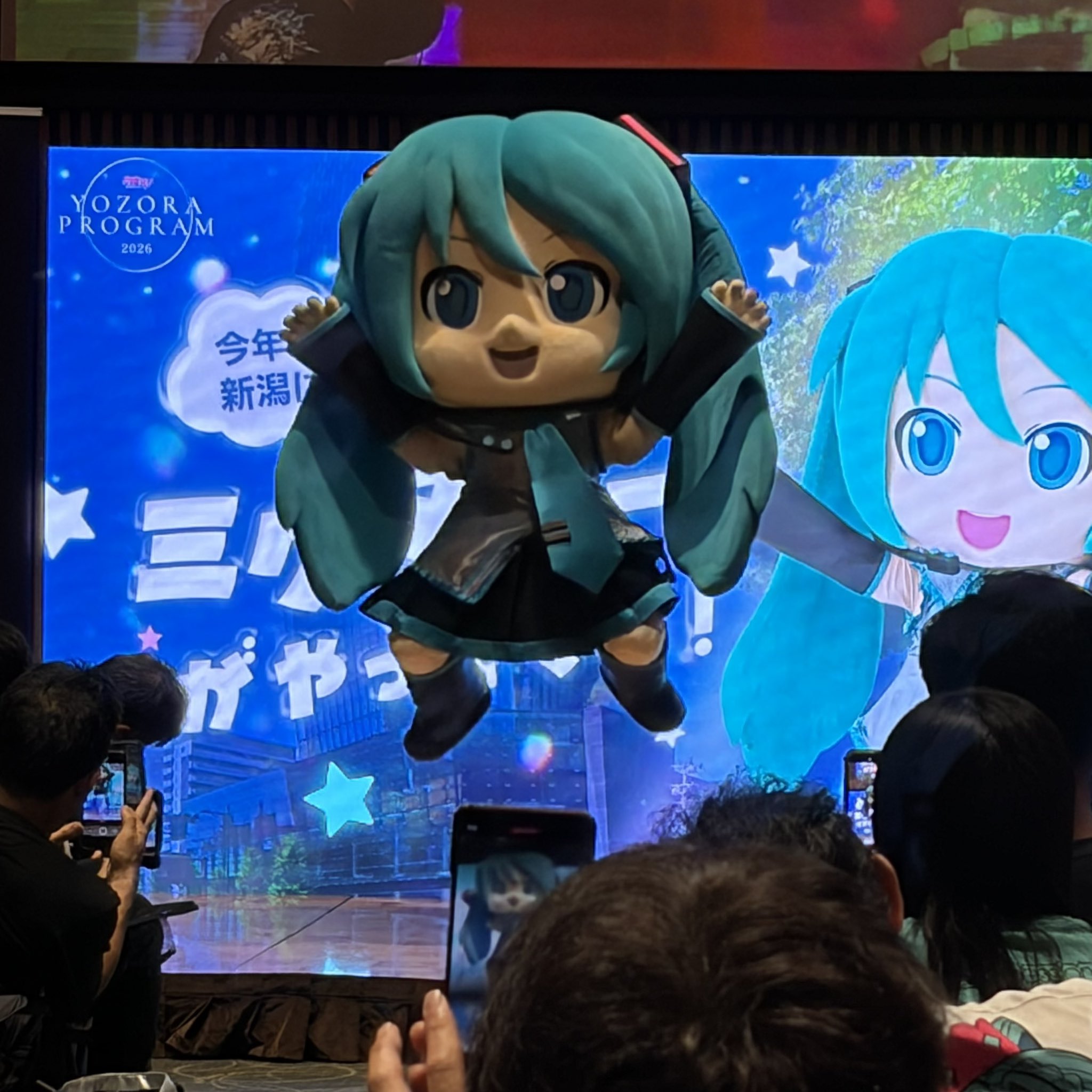
Have any of you seen dayo with your own eyes? Have you seen dayo face to face? And I'm not referring to 39chan users, I'm referring to the one and only Mikudayo
>>
>>36480
I think she only shows up at Japanese events. I've only been to Mikuexpos and she wasn't there.
>>
>>36481
She was at voltage
>>
Screenshot….jpg - 187.81 KB (1080x1764) Download SauceNAO IQDB Yandex

>>36481
Not the official one but there was a Hachunedayo in Expo Chicago.

(Fuck I still miss expo)
>>
RDT_202609….mp4 - 6636.74 KB (720x1280) Download SauceNAO IQDB Yandex

>>
>>36548
>I still miss expo
I mean, they still do them. Were you not able to go to this year's?.
>>
>>36549
I feel bad for that Kikuo cosplayer lol
>>
>>36550
Fortunately I managed to go but I miss being there and all the expo period in general. Even checking the posts from locations I couldn't go was fun since there was something interesting going on in all of them. At least we got the EU one in less than 2 months and Miku with you is also coming up but waiting until 2028 is proving to be hard.
>>
>>36554
There's a term for that: post concert depression
>>
DEYSDktPVx….mp4 - 662.24 KB (960x720) Download SauceNAO IQDB Yandex

>>
I want to meet the real Mikudayo. How do people even find her? What events does she show up to?.

[Gallery] [Return] [Catalog] [Top] There are 91 posts made by people with files.

Delete post: [ File only ]

Quick Reply
0/4096
Drop files here, click to select, or paste

Verified — you can post.

Name the character shown in the picture.

Loading image…